Buying Tokenized Real Estate Has Never Been Easier

Tokenized real estate is taking off fast: Deloitte predicts $4 trillion of property will be tokenized by 2035, up from less than $0.3 trillion in 2024 (Deloitte Center for Financial Services, 2025). You can now buy a share of a rental property in about ten minutes, starting from $50-$500 depending on the platform, and collect your cut of the rent without lifting a finger. As more platforms pop up, investing keeps getting easier. Picking the right platform is the hard part. This guide walks you through how to buy tokenized real estate step by step, so you can avoid the common mistakes.
Quick Summary
Buying tokenized real estate takes five steps: choose an audited platform with a secondary market, set up an EVM-compatible wallet, research the property's market, buy tokens (from $50 on Lofty to $500 on Binaryx), and let smart contracts deliver rental income. Deloitte projects the tokenized property market will reach $4 trillion by 2035. Below: a platform comparison, wallet picks, and a worked $10,000 portfolio.
Disclosure: Binaryx is a real estate tokenization platform, so we have a horse in this race. The steps below apply to any platform; we use Binaryx listings as worked examples and compare competitors fairly.
New to the economics behind this model? Start with our fractional real estate investing guide (LLC structure, taxes, pros and cons). This page is the practical how-to.
What is Tokenized Real Estate and How Does It Work?
Tokenized real estate is a way of dividing property into digital tokens that represent either the entire asset or a fraction of it. Each token gives the owner rights and liabilities tied to the property, much like owning shares in a company. These tokens are stored on the blockchain and managed through smart contracts, which handle things like ownership transfers and rental income distribution. This process makes real estate investment more flexible and accessible, as investors can buy and sell tokens without the need for traditional, paper-heavy processes.
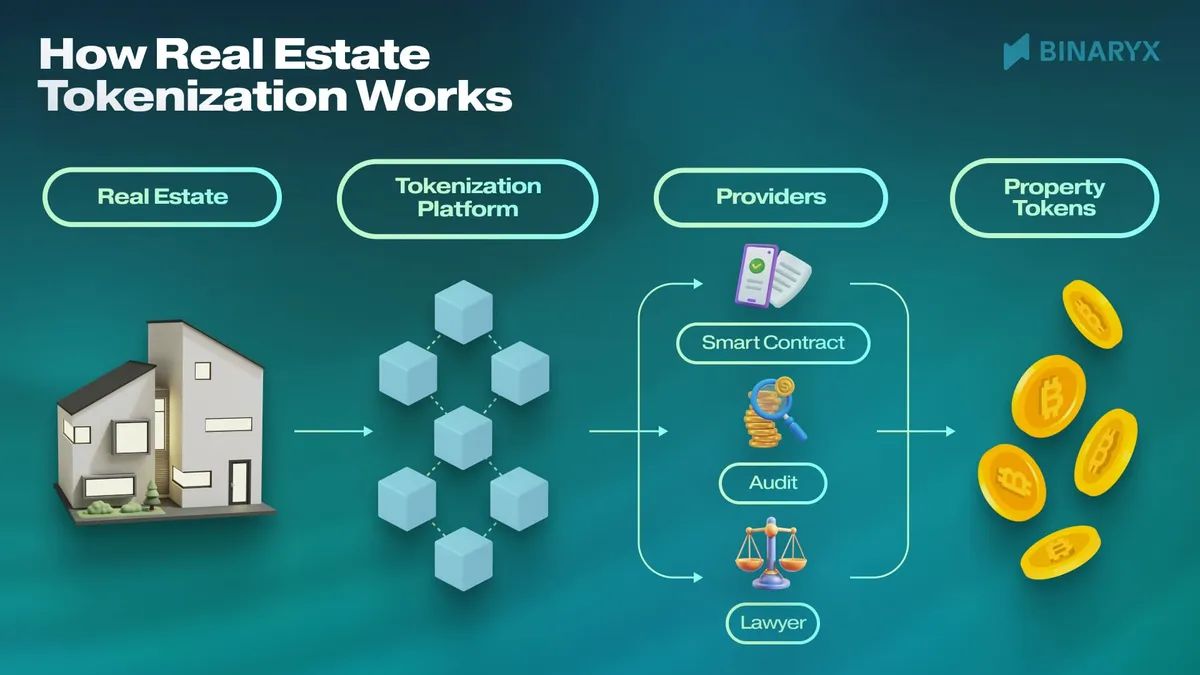
The tokenization process involves a few key steps. First, a real estate operator prepares the property, setting up a special entity (like an LLC) to own the asset. Tokens are then created based on the value of the property, and smart contracts manage the terms of ownership and income distribution. You buy these tokens through a platform, gaining fractional ownership and a share of rental income or property appreciation. Later, you can trade these tokens on secondary markets to exit investments. Check out our tokenization article to know more about how it works technically and legally.
Key Benefits of Investing in Tokenized Real Estate
- Portfolio diversification: Tokenized real estate lets you invest in a range of properties, from luxury villas to commercial buildings, without needing to own the entire asset. This opens up the chance to diversify your investments and spread risk across different markets.
- Improved liquidity: Traditional real estate investments can lock up your capital for years, but with tokenization, you can buy and sell property shares quickly. This makes it much easier to access your money when needed, without waiting for a full property sale.
- Lower investment threshold: You don’t need a fortune to start investing in real estate. Tokenization allows you to enter the market with small amounts, giving you the chance to invest in properties with just a few dollars.
- Global reach: You can invest in real estate across different countries without the hassle of local bureaucracy. Tokenized platforms give you access to international properties, allowing you to diversify globally, all from your laptop.
- Anytime access: Unlike traditional real estate markets, tokenized real estate operates 24/7. You can make transactions at any time, giving you greater control and flexibility in managing your investments.
- Cost savings: Smart contracts handle the transactions, eliminating middlemen and reducing the fees usually tied to buying or selling real estate. Fewer hands in the deal means lower costs for you.
Choosing the Right Platform for Buying Tokenized Real Estate
Choosing the right platform is the most important step when buying tokenized real estate because your property tokens are tied to that platform. You’ll want to focus on platforms that are transparent and audited, ensuring your investment is secure. Make sure the platform has a clear business model and offers key features like a secondary market, so you can easily exit whenever you need.
Also weigh the blockchain the platform operates on. Most tokenization happens on Ethereum, known for its security and liquidity. Platforms built on Ethereum or its Layer 2 solutions, like Polygon or Arbitrum, provide better flexibility and compatibility. Sticking to these ecosystems can ensure smoother transactions and broader access.
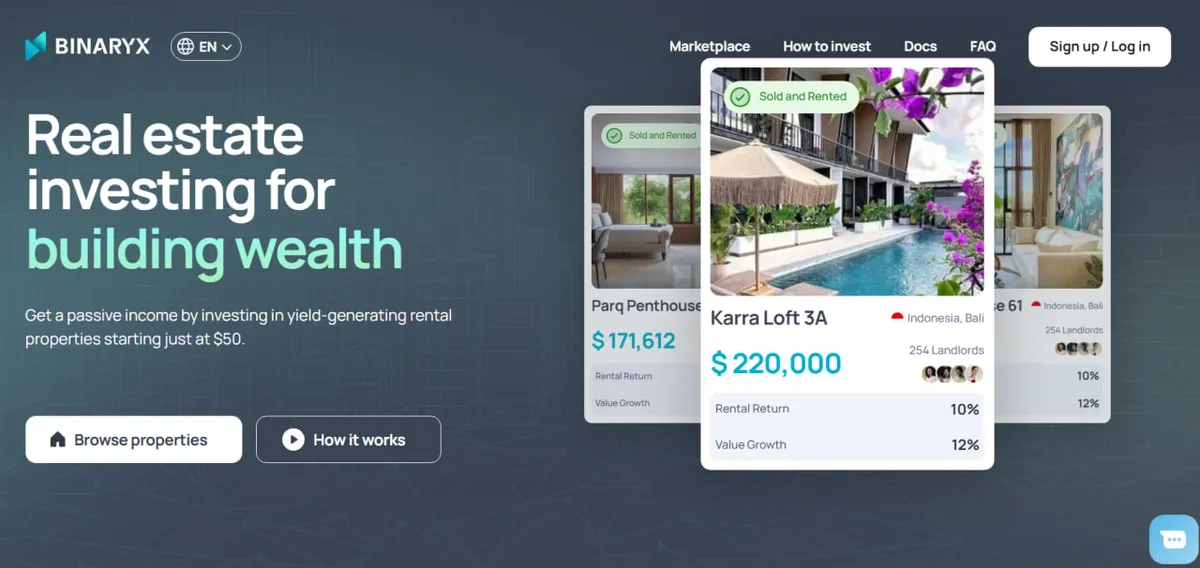
Some well-known platforms to explore include RealT, which focuses on rental family houses in the US; Lofty for US commercial and residential properties; and Binaryx, which offers global investment opportunities in places like Bali, Montenegro, and Turkey. Comparing these platforms will help you choose the best one for your goals.
| Platform | Geography | Min. entry | Income payout | Secondary market |
|---|---|---|---|---|
| RealT | US single-family rentals | ~$50 | Rent paid in stablecoins | Yes |
| Lofty | US residential | $50 | Daily | Yes |
| Binaryx | International villas (Bali, Montenegro, Turkey) | $500 (shares ~$50) | Monthly | Yes |
One distinction trips up many beginners: companies like Tokeny or Polymesh that rank for "tokenized real estate" are B2B infrastructure providers; they tokenize assets for issuers, not for retail buyers. If you want to buy tokens yourself, you need a retail marketplace like the three above (platform disclosures, June 2026).
Setting Up and Securing Your Crypto Wallet
Your crypto wallet is the key to holding and managing your tokenized real estate. It’s where your property tokens are stored, and it gives you full control over your investments. Without a secure wallet, you risk losing access to your assets, so it’s critical to choose a reliable wallet and ensure it’s properly protected. Most tokenization platforms operate on EVM chains, so you’ll need a wallet compatible with the Ethereum Virtual Machine (EVM).
Metamask is the most popular choice for EVM wallets, but its user experience (UX) feels outdated compared to newer options. Wallets like Rabby and Coinbase Wallet offer a much smoother experience, with better interfaces and features that make managing your investments easier. Compare the top Metamask alternatives to pick the one that suits you.
Choosing the Best Tokenized Properties
When investing in tokenized real estate, location, and market research are just as critical as traditional property investing. Understanding the local market’s trends (rental yields, development potential, price fluctuations) can help you make more informed decisions. Study the region where the property is located, as factors like local demand, infrastructure projects, and tourism can significantly impact the property's value and income potential. Treat tokenized properties like any other real estate investment: you need to do your homework.
To make the most of your investment, start small and gradually build your portfolio as you gain experience. Building a network of fellow investors and industry experts will help you stay informed and spot new opportunities. Try different strategies and be open to new ideas, and you will find the approach that fits your goals. Don’t be afraid to learn from your mistakes and others' experiences.
Investing in Tokenized Rental Properties
Tokenized rental properties let you own a slice of an income-generating property without all the headaches of managing it yourself. Each property is broken down into digital tokens that represent shares of ownership. When you buy these tokens, you get a portion of the rental income, just like traditional real estate, but with far more flexibility. You can trade your tokens whenever you want, plus you don’t need a huge amount of money to get started. It’s a simple way to earn passive income and invest in real estate on your own terms.
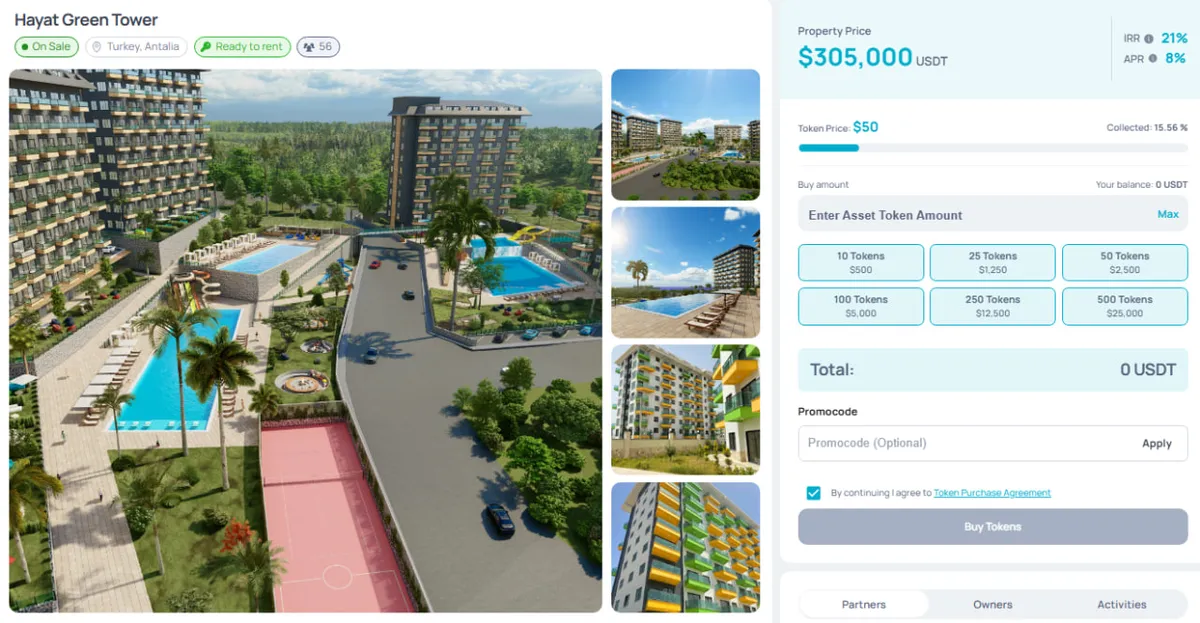
Here’s how the process works on Binaryx, using the Hayat Green Tower in Turkey as an example:
- Property evaluation: Binaryx evaluates the property, valued at $305,000, and sets up a special legal entity to own it.
- Token creation: The property is divided into 6,100 tokens, priced at $50 each.
- Purchase tokens: You buy tokens, for example, 100 tokens, which gives you ownership of about 1.64% of the property.
- Smart contract management: Smart contracts handle rental income distribution, automatically sending your share to your wallet.
- Secondary market exit: If you want to sell, you can trade your tokens on the secondary market at any time, making your investment flexible.
Exploring Tokenized Off-Plan Properties
Tokenized off-plan properties allow you to invest in real estate projects before construction is completed. These types of investments give you the opportunity to benefit from price appreciation as the project develops. Essentially, you’re buying into the property at a lower price during the construction phase, and as the project moves toward completion, the value of your tokens increases. This approach offers higher potential returns compared to completed properties, making it attractive for investors looking for capital growth rather than just rental income. For the full pre-construction playbook, including the risk checklist, see our off-plan property investment guide.
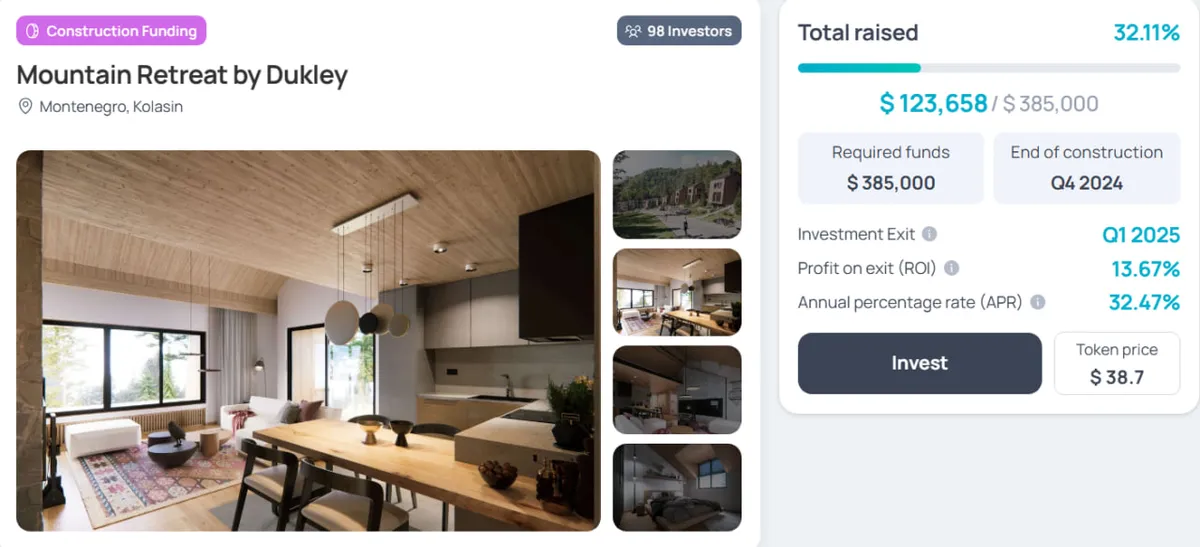
Here’s how it works on Binaryx, using the Mountain Retreat by Dukley in Montenegro as an example:
- Early-stage investment: The Mountain Retreat, valued at $385,000 at listing, was divided into tokens priced at $38.71 each. Early tokens sell at the lowest price.
- Token price increase: As more tokens are sold, the price of each subsequent token rises, rewarding early investors with the best deals and highest potential for growth.
- Token purchase: You buy tokens at the current price, securing your share in the property. In this listing, 100 tokens carried a 33.5% projected return at the time.
- Value appreciation: As a project moves through its construction phase toward completion, the token price continues to increase, and your investment appreciates in value.
- Exit or convert: Once the project is finished, you can either sell your tokens to lock in your profits or convert them into rental income tokens to start earning rental income from the completed property.
Buying Tokenized Real Estate on Binaryx: A Case Study
Let’s build a balanced real estate portfolio on Binaryx with a $10,000 investment, split evenly across two rental properties for steady monthly income and two construction investments for higher returns upon completion. This is a worked example assembled from late-2024 Binaryx listings, with yields as published at the time; current listings and rates differ. The balancing logic is what transfers.
Portfolio Composition:
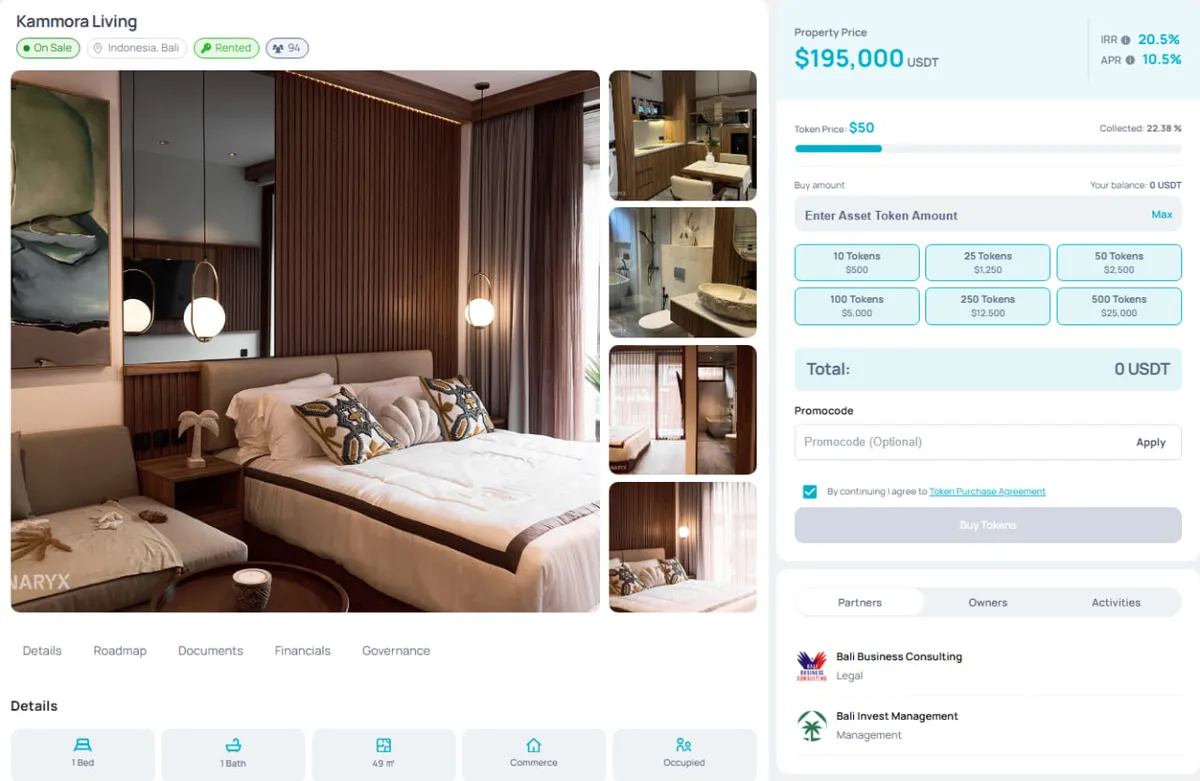
- $2,500 in Kammora Living rental villa in Bali with a 10.5% APR.
- $2,500 in Hayat Green Tower in Antalya, Turkey with an 8% developer-contracted rental rate.
- $2,500 in Mountain Retreat by Dukley in Montenegro with a projected 13.66% ROI as an off-plan investment, exiting at construction completion.
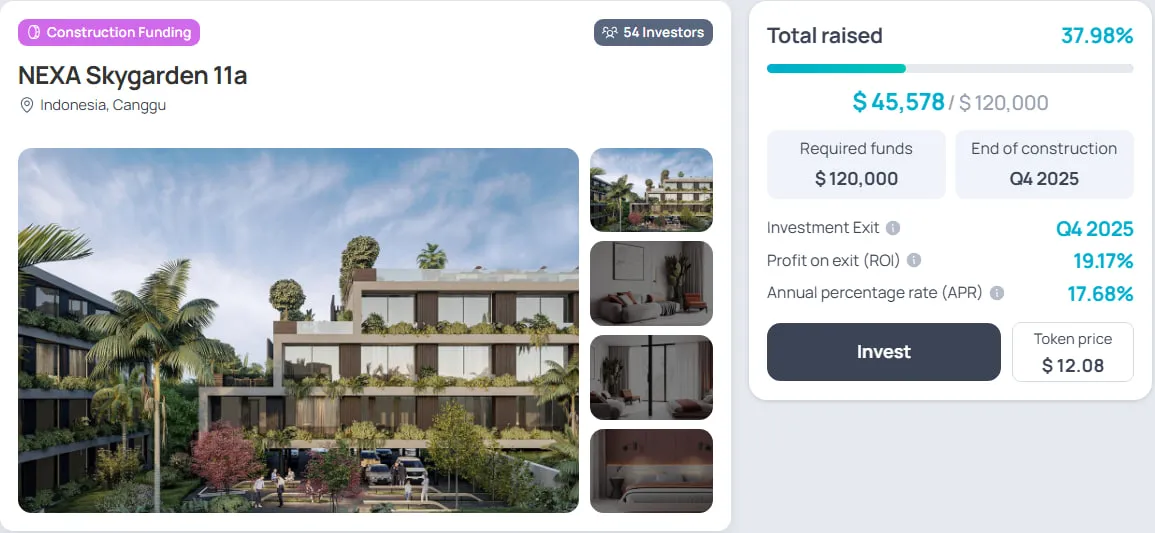
- $2,500 in Oasis Royal Collection 11a (formerly Nexa Sky Garden) construction investment in Bali with up to 19% projected ROI at listing, exiting at completion.
First-year total:
- Kammora Living (10.5% APR): $2,500 * 10.5% = $262.50
- Hayat Green Tower (8% APR): $2,500 * 8% = $200
- Mountain Retreat by Dukley (13.66% ROI): $2,500 * 13.66% = $341.50
- Oasis Royal Collection 11a (19% ROI): $2,500 * 19% = $475
First-year total ROI: $262.50 + $200 + $341.50 + $475 = $1,297
This portfolio is just an example to show how you can combine rental income and capital appreciation from off-plan projects on Binaryx. It’s a straightforward test portfolio that doesn’t factor in transforming construction tokens into rental income upon project completion. Of course, you can customize and build your own unique portfolio based on your goals, whether you're looking for more passive income, long-term capital growth, or a mix of both. Binaryx offers a wide variety of options, so you have the flexibility to tailor your investments as you see fit. Check it out.
Frequently Asked Questions
Where can I buy tokenized real estate?
Through retail tokenization marketplaces: RealT and Lofty for US residential properties, Binaryx for international rentals in Bali, Montenegro, and Turkey. Tokens are priced around $25-50; per-project minimums range from $50 (Lofty) to $500 (Binaryx). All three run secondary markets for exits. B2B providers like Tokeny or Polymesh tokenize assets for issuers, so they aren't places where individuals buy property tokens.
Is tokenized real estate legit?
The model is legal in major jurisdictions when structured properly. Reputable platforms hold each property in a dedicated legal entity, so tokens map to enforceable ownership rights. Binaryx, for example, uses Wyoming DAO LLCs under the state's 2021 law (W.S. SF0038). Deloitte projects $4 trillion of real estate will be tokenized by 2035. Verify the legal wrapper before buying on any platform.
What are the downsides of tokenized real estate?
Four main ones: platform dependency (your tokens live on one company's marketplace), thinner liquidity than stocks despite secondary markets, evolving regulation that differs by country, and technology risk if you mismanage your own wallet keys. Diversifying across properties and keeping your seed phrase offline mitigate the last two.
How much money do I need to buy tokenized real estate?
Tokens typically cost $25-50 on major platforms. Minimums differ: Lofty starts at $50, while Binaryx requires $500 worth of shares per project. A meaningful diversified position looks more like $1,000-10,000 spread across several properties and markets. The worked portfolio above shows how $10,000 split across four listings produced a projected $1,297 first-year return, roughly 13%.
Is tokenized real estate a good investment?
It depends on what you need. Versus REITs you get property-level choice and often higher rental yields (8-12% on international platforms), but less liquidity. Versus direct ownership you give up control in exchange for a $50-500 entry and zero management work. It fits investors who want real estate income without six-figure capital, and suits long horizons.
Conclusion
Tokenized real estate opens up a world of opportunities for investors, offering flexibility, lower entry barriers, and the potential for global property diversification. Whether you’re interested in steady rental income or looking for high returns from construction projects, the process has never been easier. Pick an audited platform, secure your wallet, research the market, and start small. The five steps above will carry you through your first purchase.
Read more:
- Fractional Real Estate Investing: 2026 Complete Guide: the economics, LLC structure, and tax rules behind tokenized ownership
- Off-Plan Property Investment: How to Maximize ROI: the pre-construction strategy used in the portfolio above
- Binaryx Smart Contracts Explained: verify your property tokens on a blockchain explorer
- 6 Best Places to Invest in Real Estate: where the underlying markets are heading
This article is for educational purposes only and does not constitute financial advice. Projected returns describe specific past listings and are not promises of future performance. All investments carry risk, including potential loss of principal.