Montenegro Real Estate 2026: Why Smart Investors Are Moving Before EU Accession


While investor attention clusters around familiar markets — Dubai, Bali, Lisbon, Athens — a small Adriatic nation is quietly assembling one of the most compelling real estate profiles in Europe. If you've been looking beyond the usual suspects for a European property play, Montenegro is the market most people haven't found yet.
Montenegro has a population under 630,000, a coastline that rivals Croatia's, and a mountain interior that most international investors have never heard of. It also has something none of those popular markets can offer right now: a credible EU accession timeline and property prices that haven't yet adjusted to what that means. What makes it interesting isn't hype — it's a handful of structural changes that are already underway and measurable.
Here's what's actually happening in Montenegro real estate in 2026 — the macro forces, the data, and the risks — so you can decide for yourself whether this market deserves a closer look.
EU Accession: The Catalyst That Reprices Everything
Montenegro opened EU accession negotiations in 2012. As of early 2026, 13 of 35 negotiation chapters have been provisionally closed, with several more in advanced stages. Current projections from EU officials and regional analysts place membership between 2028 and 2030.
Why does this matter for property?
History is instructive. When Croatia joined the EU in 2013, coastal property prices along the Dalmatian coast rose 20–40% in the three years preceding accession. That pattern repeated in the Baltics and Central Europe — every small economy where EU membership unlocked capital flows, institutional investment, and cross-border mortgage access.
Montenegro is earlier in that curve. Property prices — particularly outside the coastal strip — have not yet priced in accession. The gap between where prices are and where EU membership historically pushes them represents a window that narrows as the accession date becomes more concrete.
The caveat
This is not a guarantee. Accession timelines can shift. Political developments, rule-of-law benchmarks, and EU internal dynamics all introduce uncertainty. But the trajectory is forward, and the market is pricing in very little of it — especially in the interior.
Tourism: The Numbers Behind the Narrative
Montenegro's tourism numbers have been moving faster than most people realize.
Overall growth: Tourist arrivals have increased approximately 30% since 2022, recovering past pre-pandemic levels and entering a new growth phase driven by route expansion and infrastructure development.
Source market diversification: The most striking data point is the shift in visitor origin. Israeli tourist arrivals surged 52% year-over-year — a single data point that reflects both Montenegro's growing visibility in new source markets and the country's appeal as a Mediterranean alternative with lower price points.
Air connectivity: Wizz Air has announced 17 new routes to Podgorica for 2026, connecting Montenegro directly to mid-tier European cities that previously had no direct access. Each new route creates a new demand pipeline for accommodation — particularly outside the traditional coastal corridor.
Seasonality is shifting
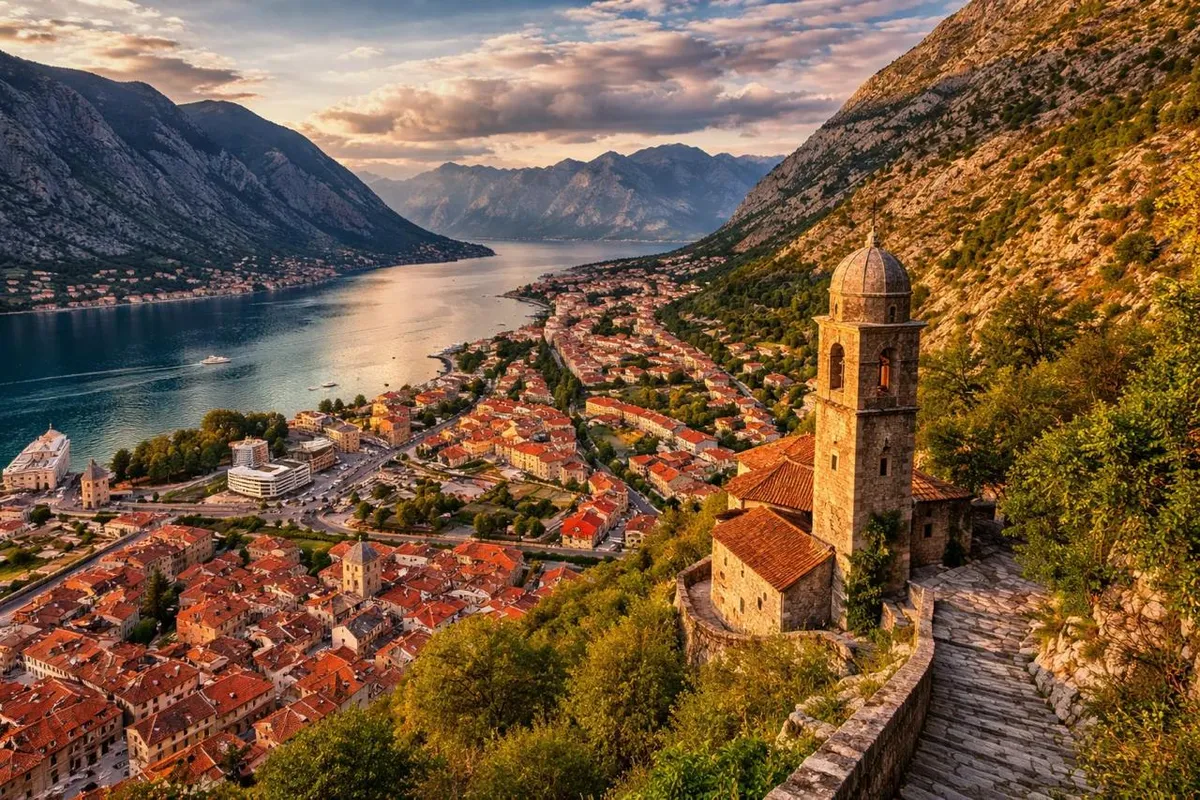
Historically, Montenegro's tourism was concentrated in the June–September coastal window. That's changing. The mountain interior — particularly ski and adventure tourism destinations — is extending the viable season to 10–11 months: winter ski traffic, spring hiking, summer adventure sports, and autumn wellness retreats are creating a four-season demand model.
The risk here is real: tourism is cyclical, geopolitically sensitive, and dependent on continued route expansion. But the structural trend — more routes, more source markets, longer seasons — is moving in one direction.
The Mountain vs. Coast Price Gap
This is where the numbers get interesting.
Montenegro's coastal property — Budva, Kotor Bay, Tivat — has already attracted significant international capital. Prices in premium coastal locations range from $3,000 to $6,000+ per square meter, driven by Russian, Serbian, and Western European buyers over the past decade.
The mountain interior tells a different story. In towns like Kolašin, Žabljak, and the Bjelasica range, property prices remain below $2,000 per square meter. That's a 2–3x discount compared to coastal equivalents in the same country, despite growing tourism demand.
What's driving the gap?
- Historical underinvestment: Montenegro's mountain infrastructure lagged behind the coast for decades. That's changing rapidly.
- The Bar-Boljare Highway: This transformative infrastructure project cuts travel time between the coast and the mountain interior from 3+ hours to under 90 minutes. When a market becomes physically accessible, prices adjust.
- Kolašin as a case study: Kolašin sits at the intersection of two ski resorts with recent upgrades, a national park, and the new highway corridor. It's positioned as Montenegro's premier mountain destination — and yet property prices remain a fraction of comparable Alpine locations.
The gap won't last indefinitely. As EU accession approaches, as the highway nears completion, and as airlift expands, mountain property in Montenegro is likely to reprice.
Infrastructure: $2.3 Billion in Motion
Montenegro's government has committed approximately $2.3 billion in infrastructure investment through 2028. The three projects that matter most for real estate:
Bar-Boljare Highway
The most significant infrastructure project in Montenegro's history. Connecting the Adriatic coast to the Serbian border through the mountain interior, this highway transforms accessibility for Kolašin, Mojkovac, and the Bjelasica region. Sections are already operational; full completion is projected by 2028.
Podgorica Airport expansion
With Wizz Air's 17 new routes and growing traffic from Ryanair and national carriers, Podgorica's airport is undergoing capacity expansion. More flights mean more visitors — and more visitors need accommodation.
Ski infrastructure investment
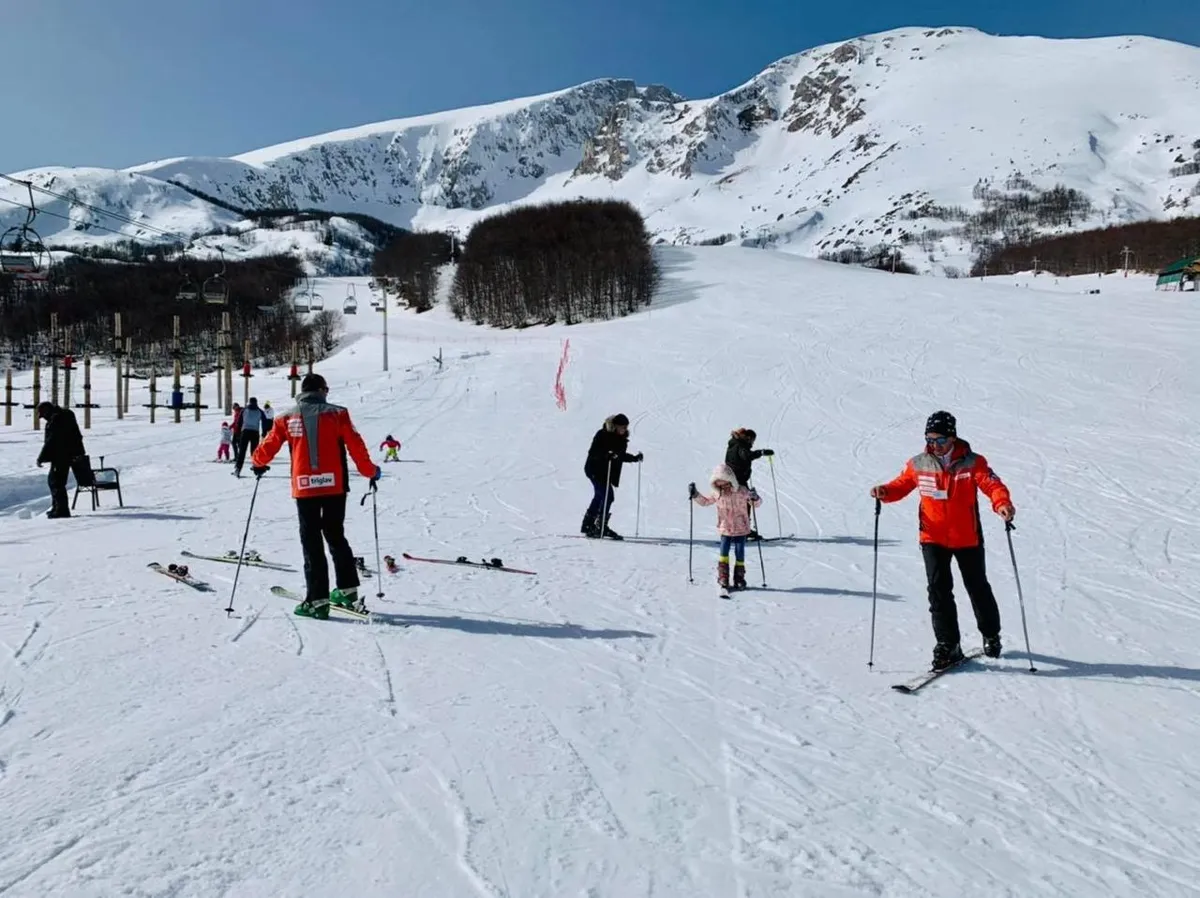
Kolašin 1600 and Kolašin 1450 ski resorts have received upgrades in lift capacity and trail expansion. Combined with summer adventure infrastructure (mountain biking trails, via ferrata, wellness facilities), these investments are creating year-round destination appeal.
Infrastructure changes take time to fully impact property markets. But in small economies like Montenegro, the effect of a single highway or airport expansion is proportionally much larger than in a mature market.
Legal Framework: What Foreign Investors Need to Know
If you're considering buying property in Montenegro, the legal framework is more straightforward than most Balkan markets.
- Foreign nationals can own property with the same rights as Montenegrin citizens (with some restrictions on agricultural land)
- No residency requirement for property purchase
- Property registration is centralized and digitized — Montenegro's land registry system has been modernized with EU assistance
- Tax environment: Property transfer tax is 3%. Annual property tax ranges from 0.1% to 1% depending on municipality and property type. Montenegro has no wealth tax.
That said, due diligence is essential. Title verification, encumbrance checks, and local legal counsel are non-negotiable for any property transaction. Montenegro's legal system is still developing, and enforcement can be slower than in EU member states.
The Risks — Honestly
Here's what could go wrong.
EU accession delay: If accession slips beyond 2030, the repricing catalyst weakens. Political instability, reform fatigue, or EU internal resistance could slow the timeline.
Tourism dependency: Montenegro's economy is heavily tourism-dependent. A European recession, pandemic resurgence, or shift in travel patterns would impact property demand — particularly in hospitality-focused segments.
Construction quality variance: Montenegro's construction sector ranges from international-grade developers to smaller operators with inconsistent quality. Developer selection is arguably the single most important variable in any Montenegro property investment.
Liquidity: Montenegro is not a liquid real estate market. Resale timelines for direct property ownership can be lengthy, particularly for mountain properties outside peak demand periods.
Currency risk: Montenegro uses the euro but is not in the eurozone — it adopted the euro unilaterally. This means no ECB monetary policy backing, though EU accession would formalize the arrangement.
Regulatory evolution: As Montenegro harmonizes with EU standards, regulatory changes in tax, property, or foreign ownership law could affect existing investments.
These risks are real. They don't invalidate the opportunity — but they define the terms under which it should be evaluated.
What This Means for Investors
Montenegro in 2026 sits at a specific intersection: credible EU accession momentum, accelerating tourism growth, transformative infrastructure investment, and property prices — particularly in the mountain interior — that haven't adjusted to any of it.
That combination has a historical precedent. It's the same pattern that preceded repricing in Croatia, the Baltics, and Central Europe. Whether Montenegro follows the same path depends on execution — of EU reforms, of infrastructure projects, of tourism strategy.
If you're willing to invest in Montenegro ahead of the consensus, the data suggests the market is worth serious examination. If you'd rather wait for EU membership confirmation before acting, the entry price will likely be higher when you get there.
Neither approach is wrong. What matters is making the decision based on data, not on whether Montenegro happens to be trending on social media this month.